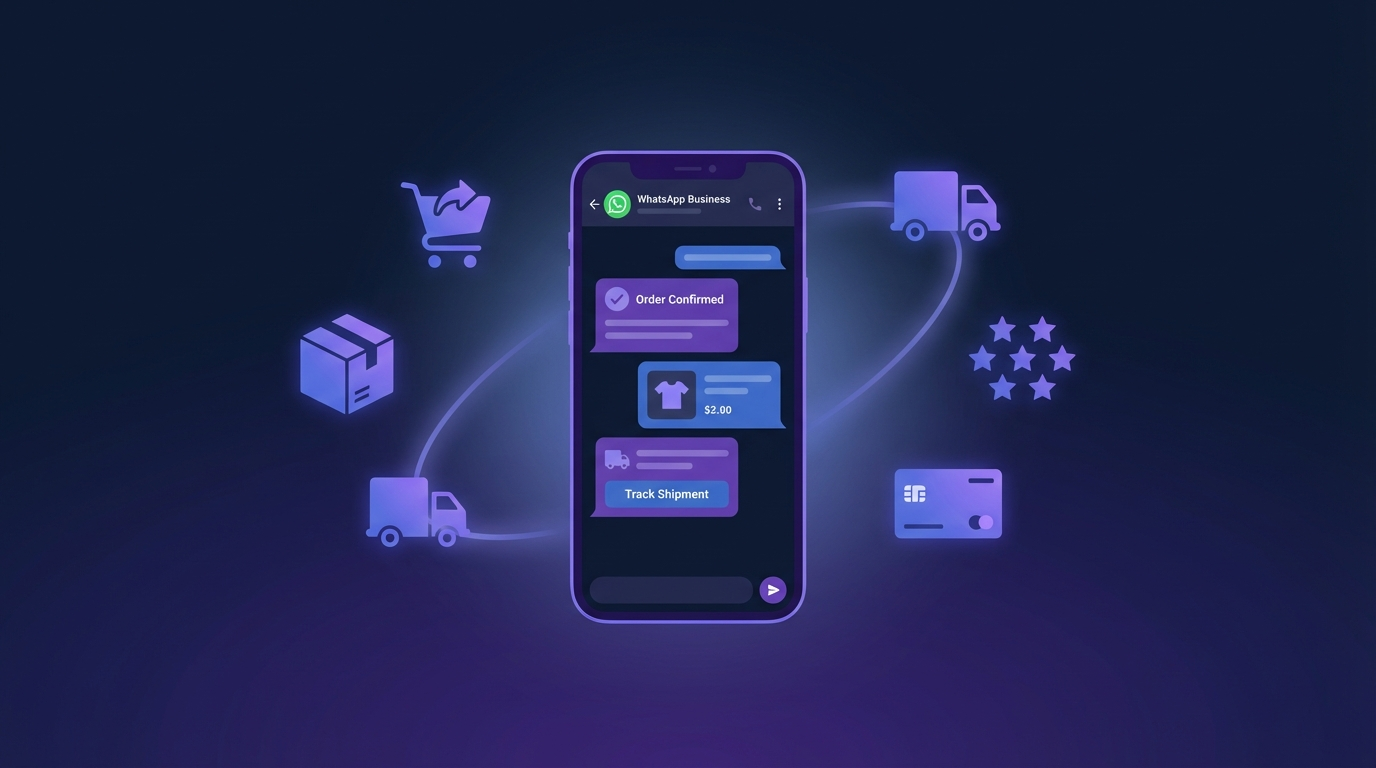

Si vous vendez sur Shopify, environ 70 centimes sur chaque euro qui atteint votre checkout ne se transforment jamais en commande. Le taux d'abandon panier global est de 70,2% sur l'e-commerce, et les boutiques Shopify font à peine mieux à 69,8% (Easy Apps Ecom, 2026). Sur mobile — où la majorité de votre trafic se trouve désormais — ce chiffre grimpe à 76,8%.
L'arsenal de récupération standard (une séquence de trois emails) reconquiert 10 à 17% de ces paniers. WhatsApp, utilisé correctement, en récupère 20 à 30%, certains marchands rapportant jusqu'à 60%. Cet article est le playbook pour atteindre ces chiffres sur Shopify : la cadence, la structure des templates, l'arithmétique des coûts, et le travail de conformité qui sépare un programme qui scale d'un programme qui fait flagger votre numéro.
Pourquoi la boucle de récupération email-only est cassée sur Shopify
L'email ne perd pas parce que le copywriting est mauvais. Il perd parce que le canal est saturé. Une boîte mail professionnelle reçoit en moyenne 121 emails par jour, et les messages de panier abandonné concourent avec newsletters, OTP, invitations calendrier et campagnes promotionnelles. Le résultat est prévisible : un taux d'ouverture de 20% est considéré comme sain.
Sur les paniers qui sont ouverts, une fraction clique, et une fraction encore plus petite finit le checkout. Cela laisse à une boutique Shopify trois plafonds structurels empilés :
- Saturation du canal — votre message arrive dans une file d'attente de 100+
- Latence — même la meilleure séquence email envoie le premier message 1 à 4 heures après l'abandon, bien après que l'intention soit retombée
- Friction pour agir — cliquer dans l'email, charger une page de checkout, se réauthentifier
Un taux d'abandon de 70,2% (Easy Apps Ecom, 2026) multiplié par un plafond de récupération de 10-17% signifie que l'email récupère, dans le meilleur des cas, 5% du volume total de checkout. Pour la plupart des boutiques, c'est l'écart entre une croissance saine et un palier.
Le taux d'ouverture de 98% est réel — et il change l'économie de la récupération
Les taux d'ouverture WhatsApp se situent systématiquement entre 95% et 98% dans les benchmarks publiés (Sinch Engage, 2026). Traitez le haut de fourchette avec scepticisme, mais le bas — 95% — est déjà environ 4× supérieur au taux moyen de l'email.
Le mécanisme est simple. WhatsApp vit dans un fil privé à haute confiance que les utilisateurs surveillent activement pour les messages de proches et d'entreprises sélectionnées. Il n'y a pas de dossier spam, pas d'onglet promotions, pas de filtre "newsletters" coupé. Un message WhatsApp arrive avec une notification vue en quelques minutes, pas en heures.
Traduit en récupération Shopify, l'arithmétique se compose :
| Canal | Taux d'ouverture | Taux de récupération |
|---|---|---|
| Email unique | ~20% | 5-8% |
| Séquence 3 emails | ~20% | 10-17% |
| Relance SMS | ~95% | 8-12% |
| Email + SMS combinés | mixte | 15-22% |
| Séquence WhatsApp | 95-98% | 20-30%+ |
WhatsApp ne remplace pas l'email — il s'empile par-dessus. Les marchands à 30%+ de récupération ne font pas WhatsApp à la place de l'email ; ils font les deux, avec WhatsApp comme premier point de contact à forte intention.
La séquence en 3 messages qui convertit
L'erreur que font la plupart des marchands au jour 1 est d'envoyer un seul template "vous avez oublié quelque chose" puis de s'arrêter là. La récupération est une séquence, et sur WhatsApp cette séquence est courte, rapide, et structurée autour de la décroissance de l'intention client.
Message 1 — la relance utility (15-30 minutes après l'abandon)
Le premier message arrive pendant que l'intention est encore chaude. Il doit ressembler à du service, pas à du marketing. Utilisez un template catégorie utility (validé Meta) :
Bonjour Sarah, vous avez laissé une chemise en lin Sage (taille M) dans votre panier sur Notreboutique. Il est toujours sauvegardé — finalisez votre commande ici : [votre lien]. Répondez STOP pour vous désabonner des rappels panier.
Trois choses que ce template fait bien :
- Nomme le produit, pas la marque
- Un seul CTA, un seul lien
- Désinscription incluse (Meta l'exige sur les catégories marketing ; nous recommandons de l'inclure aussi sur les messages utility par souci de confiance)
Message 2 — le rappel de valeur (4 à 6 heures)
La plupart des premiers contacts qui ne convertissent pas calent sur une vraie objection : coût de livraison (47% des abandons), confiance, ou délai de livraison (Easy Apps Ecom, 2026). Adressez-la directement.
Sarah — petite info : votre commande bénéficie de la livraison express offerte (moins de 3 jours sur votre code postal). Votre panier est toujours là : [lien].
C'est un template marketing parce qu'il propose un avantage. Le changement de catégorie compte pour la facturation (couvert plus bas).
Message 3 — l'incitation (24 heures)
Si le panier n'a toujours pas converti à 24 heures, envoyez une seule offre limitée dans le temps. N'habituez pas les acheteurs à attendre des promos — faites de ce troisième touche une rareté, pas un défaut.
Dernier rappel, Sarah : 10% de réduction sur votre panier si vous commandez aujourd'hui — code RETOUR10. Expire à minuit. [lien]
Après ça, on s'arrête. Les sources divergent sur l'ajout d'un quatrième message ; la recommandation constante est de ne pas envoyer plus de trois messages de récupération (HillTeck, 2026). Un quatrième message fait plus de mal que de bien : les opt-out grimpent, et Meta dégrade la réputation de votre numéro si votre taux de blocage augmente.
Les catégories de templates impactent votre facture
Meta facture les messages WhatsApp Business Platform par catégorie de conversation, pas au message. Les trois catégories que vous toucherez en récupération de panier sont :
- Utility — mises à jour de commande, notifications d'expédition, rappels "votre panier est toujours là". Niveau le moins cher.
- Marketing — promotions, offres de réduction, rappels de valeur. Niveau le plus cher.
- Service — réponses envoyées dans la fenêtre 24h après un message client entrant. Gratuit.
L'écart de prix entre utility et marketing est d'environ 2 à 3× selon les pays. Pour une boutique qui envoie 10 000 séquences de récupération par mois, mal catégoriser le message 1 en marketing au lieu d'utility coûte des centaines d'euros en dépense inutile sans aucun avantage (les templates utility ont en plus un meilleur score de confiance).
La séquence en 3 messages ci-dessus est structurée pour mettre votre message à plus gros volume (la première relance) sur la tarification utility, le marketing étant réservé au rappel de valeur où la réduction ou l'argument livraison justifie la catégorie. Pour la stratégie WhatsApp complète sur les coûts, voir notre Guide complet du marketing WhatsApp pour l'e-commerce.
La fenêtre de conversation 24h — votre zone de récupération gratuite
Il existe un mécanisme dans WhatsApp Business que peu de marchands Shopify exploitent : quand un client répond à votre message, vous avez 24 heures de conversation libre avec lui. Aucun template à faire valider, aucun coût par message.
Cette fenêtre est l'outil à plus fort levier de votre stack de récupération. Si un acheteur répond "et la taille ?" à votre premier message panier, vous pouvez répondre instantanément avec ce que la situation appelle — un guide des tailles, une photo, un code promo, un mot personnel d'un conseiller. Le taux de conversion à l'intérieur de cette fenêtre est nettement supérieur à n'importe quel touche templatée, parce que c'est une vraie conversation.
Pour bien l'utiliser :
- Routez les réponses entrantes vers un humain ou un agent IA bien réglé, pas vers un "nous reviendrons vers vous"
- Répondez en quelques minutes — la fenêtre se dégrade vite dans l'attention client même si elle reste ouverte côté protocole
- Gardez le lien panier sous la main — votre CRM doit savoir de quel panier parle la conversation et le remonter à celui qui répond
Connecter Shopify à WhatsApp : les données dont vous avez vraiment besoin
L'automation de récupération ne vaut que la donnée que vous y injectez. Pour une boutique Shopify, le câblage minimum viable est :
- Événement abandoned checkout — Shopify le déclenche 30 minutes après le démarrage d'un checkout incomplet. C'est votre trigger.
- Numéro de téléphone client — capté au checkout. Obligatoire, opt-in.
- Opt-in marketing WhatsApp — séparé de l'opt-in email sous la plupart des régimes (CCPA, GDPR, LGPD). Ajoutez une case explicite au checkout : "Recevoir mes notifications panier et commande par WhatsApp."
- Contenu du panier — au minimum l'article principal et le total, idéalement avec une URL de récupération qui pré-remplit le panier.
La plateforme qui possède ce câblage compte. Les intégrations Shopify natives (comme celle de Qyvo) synchronisent l'événement abandoned checkout en temps réel, tirent les données client sans export manuel, et respectent l'état d'opt-in depuis votre checkout Shopify. Les outils de "blast" génériques qui dépendent d'imports CSV perdent du signal, envoient à des clients désabonnés, et finissent par faire flagger votre numéro.
Conformité : opt-in, opt-out, et pourquoi le faire bien rapporte
WhatsApp Business Platform est le canal de messagerie à grande échelle le plus strict du marché, et c'est une feature, pas un bug. Les règles sont simples mais appliquées sévèrement :
- L'opt-in explicite est requis avant tout message initié par l'entreprise. Les cases à cocher au checkout Shopify comptent si elles sont sans ambiguïté et non pré-cochées.
- Chaque template marketing doit inclure une voie de désinscription. "Répondez STOP pour vous désabonner" est le standard.
- Le taux de blocage déclenche le throttling. Si trop de destinataires signalent ou bloquent votre numéro, Meta abaisse votre tier — donc moins de messages par jour, peu importe votre plan.
- Les templates sont relus. Meta valide les nouveaux templates en 24-48h en général, mais les rejets sont fréquents pour le langage promotionnel survendu (du type "Dernière chance !" sans vraie deadline).
Les marchands qui traitent la conformité comme un coût plutôt que comme une contrainte sont ceux qui se retrouvent throttlés et disparaissent silencieusement des chats de leurs clients. Ceux qui la traitent comme un fossé concurrentiel — opt-ins propres, hygiène d'opt-out impeccable, cadence conservatrice — gardent leur tier élevé et atteignent plus de boîtes.
Les quatre métriques qui comptent
Ne vous noyez pas dans les dashboards. Pour la récupération de panier sur WhatsApp, quatre chiffres racontent toute l'histoire :
- Taux de récupération — commandes finalisées ÷ paniers abandonnés ayant reçu la séquence. Sain : 20%+. Sous 15% : problème de cadence ou de copy. Sous 10% : problème d'opt-in ou de routage.
- Coût par commande récupérée — dépense WhatsApp totale ÷ commandes récupérées. Doit rester confortablement sous la marge contributive de votre panier moyen. Sinon, quelque chose est mal catégorisé (le plus souvent des messages utility qui passent en marketing).
- Revenu attribué — commandes récupérées × panier moyen, avec une fenêtre d'attribution saine (24-72h depuis le dernier touche).
- Taux de blocage — messages bloqués ou signalés ÷ messages envoyés. À surveiller chaque semaine. Au-dessus de 0,5% c'est jaune, au-dessus de 1% c'est rouge. Une montée signifie en général trop de touches, ou que vous tirez la séquence sur des clients qui n'avaient pas vraiment opt-in.
Par où commencer cette semaine
Si vous opérez une boutique Shopify et ne faites pas encore de récupération WhatsApp, le mouvement à plus fort levier cette semaine est le plus petit : déployez un seul template utility à 30 minutes pour vos clients francophones, avec un opt-in propre au checkout. Ça seul, sans incitation et sans relance, récupère 10 à 15% des paniers dans les 30 premiers jours — et vous donne la donnée pour ajouter les messages 2 et 3 sans deviner.
WhatsApp ne récompense pas les marketers qui le traitent comme un blast email. Il récompense les marchands qui le traitent comme un canal de service client qui se trouve aussi convertir. Commencez par là.
Prêt à lancer la récupération de panier WhatsApp sur votre boutique Shopify ? Démarrez avec Qyvo — le plan Starter à 29 $/mois inclut l'intégration Shopify, les séquences de panier abandonné, et votre premier numéro WhatsApp Business. Ou comparez les plans sur la page tarifs.